
Measure temperature with ntc
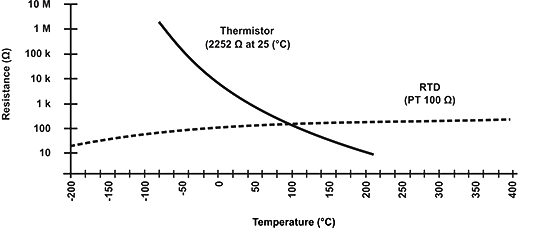
An image says it all. There is a non linear relation between temperature and resistance.
 |
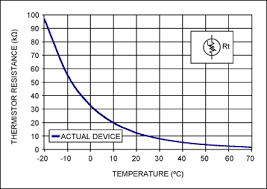 |
NTC resistance temperature relationship
|
Mockup
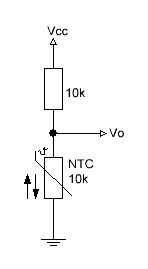
The schematics below shows a standard setup.
By use of a voltage divider its easy to calculate the resistance of the NTC when knowing supply voltage
 |
|
From schematic  above
---------------
Vcc  : voltage supply  max 5V for Arduino , max 3.3V for esp32
Vo   : Measured voltage from the divider
R    : Series resistor - not a NTC !
Rntc : NTC which is the component that shall feel the temperature


Vo               =    Vcc  * ( Rntc / (Rntc + R) )
Vo * (Rntc + R)  =    Vcc * Lntc
R * ( Vcc - Vo ) =    R * Vo
Rntc             =    R  * ( Vo /( Vcc - Vo) )
About proper selection of resistor in serie=s with the NTC
Take a look at the figure below for at 10 kOhm NTC
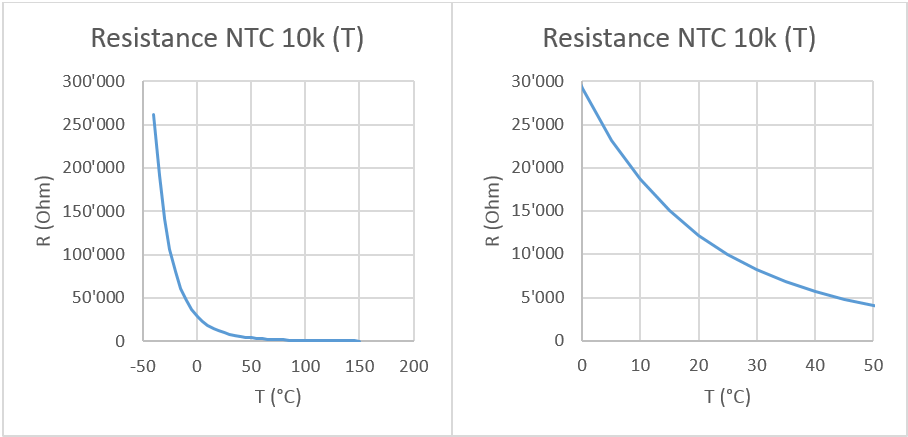 |
Resistance for an NTC for temperature interval -50C to 200C and 0C to 50C
|
Test set
If you want to use the NTC within -10 to 100C or so then you should take three measurements with temperatures within this interval.
It could be
4 C - use water from the frige
or 8C - cold tap water
100C - boiling water
52C or 54 C (mix half and half boilign water and 4 or 8C water - be quick
You measure the divided voltage by our arduino/esp32 or a multineter or an oscilloscope
doing 3rd order Steinhart-Hart model
Now go to pythoncode.html for calculating 3rd Steinhart-Hartapproximation
Self heating, dynamics
Ith the value of your NTC is low you can be subejct for selfheating e.g. the NTC heat it self and will be (slightly) hotter than the item it is measuring.
More info here
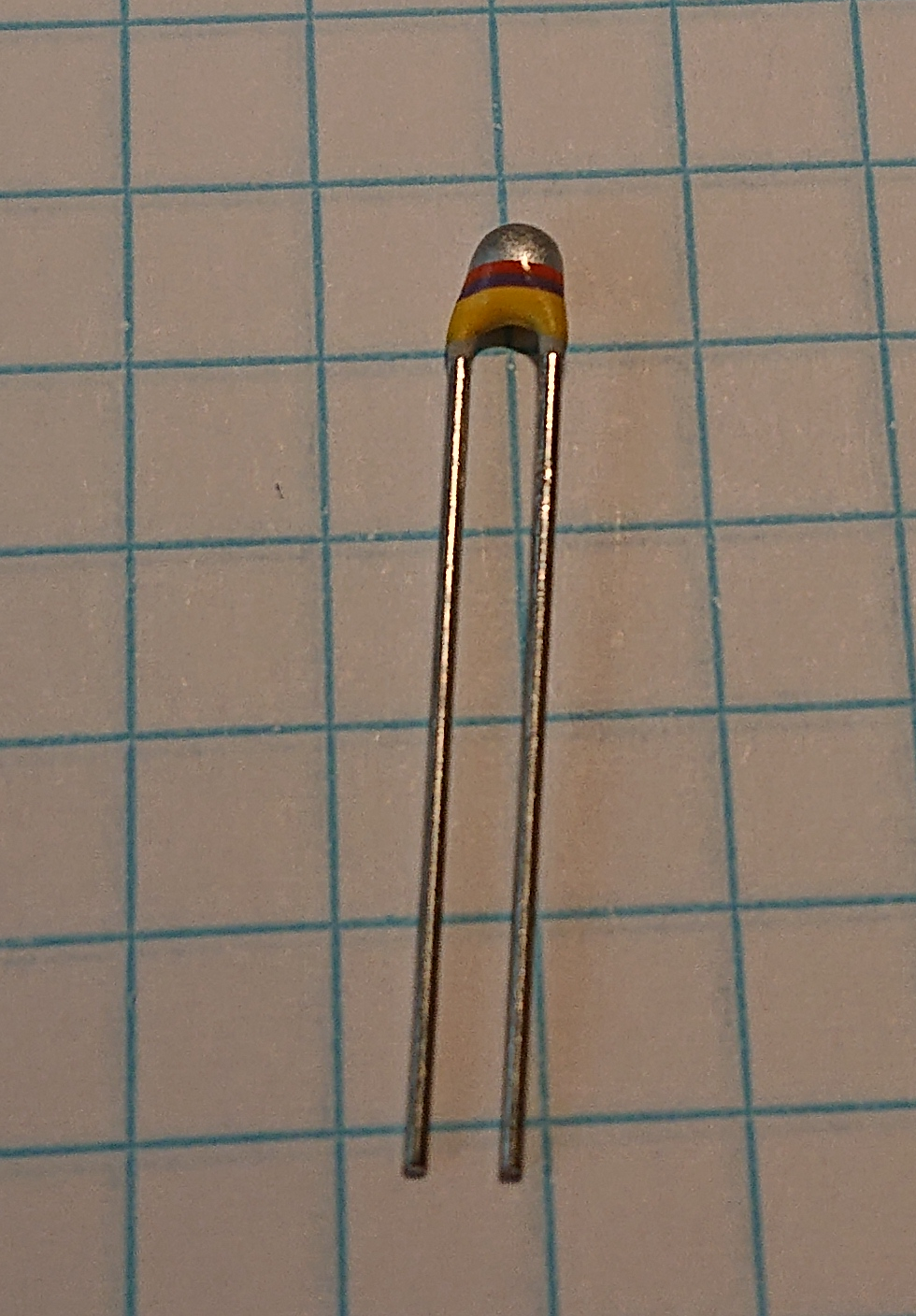 |
A small NTC of value 47 kOhm (color coded)
|
Vishay NTC
Last update: 250922 19:22:01
As long as you retain this notice you can do whatever you want with this stuff on these pages.
If we meet some day, and you think this stuff is worth it, you can buy me a beer in return :-)
(C) Jens Dalsgaard Nielsen
credit for license this goes to phk@FreeBSD.ORG
